India’s online education market is projected to grow at a CAGR of 23% between 2025 and 2030, and a large number of students are already using this time to build skills that matter. If you are in Class 11, an undergraduate, or heading into your final year, the right skills to learn in summer vacation can change how your profile looks to a college admission panel or a recruiter.
Summer break is one of the few times in the academic year when the schedule is actually yours. Those 6 to 8 weeks, spent with even a little direction, can add real weight to a CV, open up new interests, and help you get closer to figuring out what you actually want to do after college.
Why Should Students Build Skills During Summer Break?
A college degree does matter, but recruiters today look for candidates who bring skills alongside their qualifications. Online certifications and summer training for students fill that gap in a structured, low-cost way.
Here is what skill development during summer does for a student:
- Adds something to a CV beyond grades and extracurricular activities
- Gives early exposure to career fields before making any long-term decisions
- Builds confidence before internships and campus placement seasons begin
- Shows employers that the student takes initiative
- Gives students something relevant to talk about during interviews
Students who are not sure where to begin can read about how micro-certifications help build stronger career profiles before picking a course.
How to Choose the Right Course This Summer
With hundreds of options available online, picking the right one comes down to three simple questions:
- What do you want to achieve? A skill for placements, clarity on a career path, or just something productive to do with your time. The answer changes, which course makes sense.
- How much time do you realistically have? A 6 to 8-week course needs consistent daily effort. If your summer is broken up with travel or family commitments, a shorter course is a smarter choice.
- Does it connect to something real? The best courses are those where you can point to an output at the end, a certificate, a project, a portfolio piece, or a skill you can demonstrate in an interview.
A course that matches your stream, fits your schedule, and connects to a career direction you are curious about will always be more valuable than a prestigious one you never finish.
8 Best Online Certifications & Short Courses for Students in Summer 2026
The courses below have been selected based on job market demand, course duration, and relevance for Indian students across streams.
1. Google Digital Marketing & E-Commerce Certificate
Digital marketing is perhaps the most approachable skill to master during summer break, irrespective of the field of study. The modules include SEO, social media marketing, email marketing, and e-commerce fundamentals. One does not require any technical background knowledge, thus making it an ideal entry-level skill set for anyone interested in business or marketing careers.
2. Python for Everybody (University of Michigan)
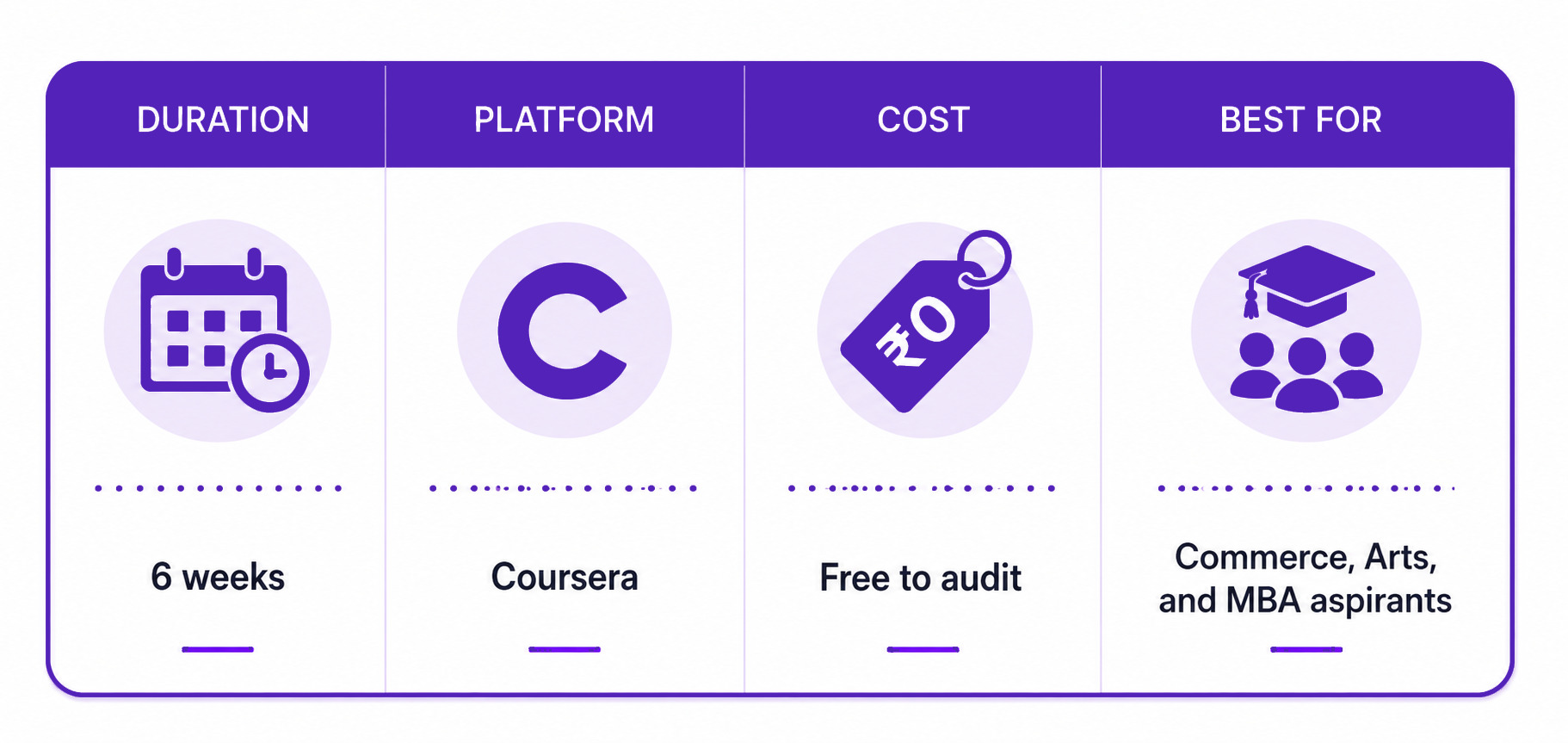
Python can be used in many fields, such as data analysis, finance, automation, and technology. The course begins from the very basics and does not need any previous programming experience. Python is one of the most popular programming languages to learn during the holidays if you want to get into the field of technology.
3. Google Data Analytics Professional Certificate
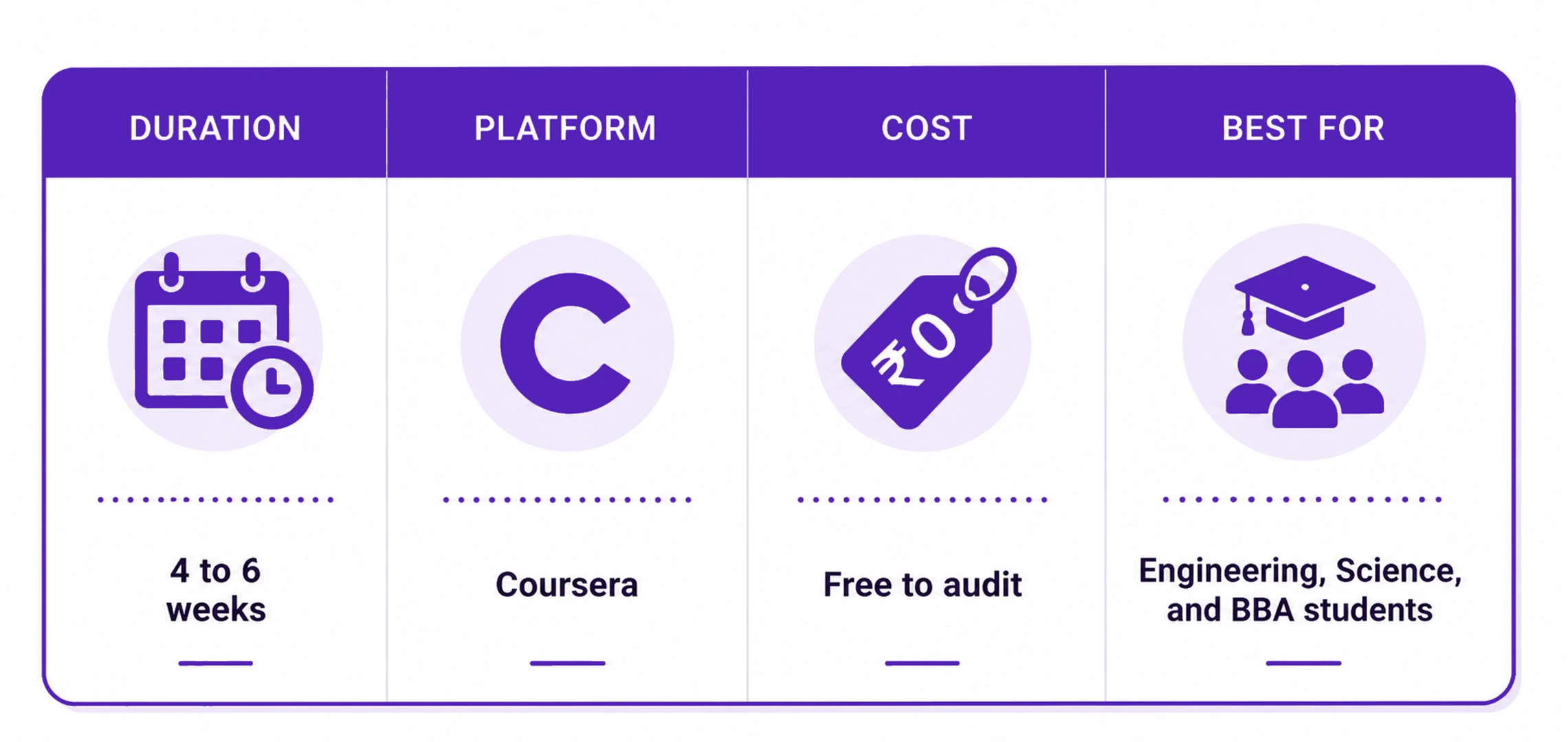
The World Economic Forum projects 11.5 million new data-related jobs by 2026. This certificate covers spreadsheets, SQL, and data visualisation tools like Tableau, skills that employers look for across banking, healthcare, retail, and technology.
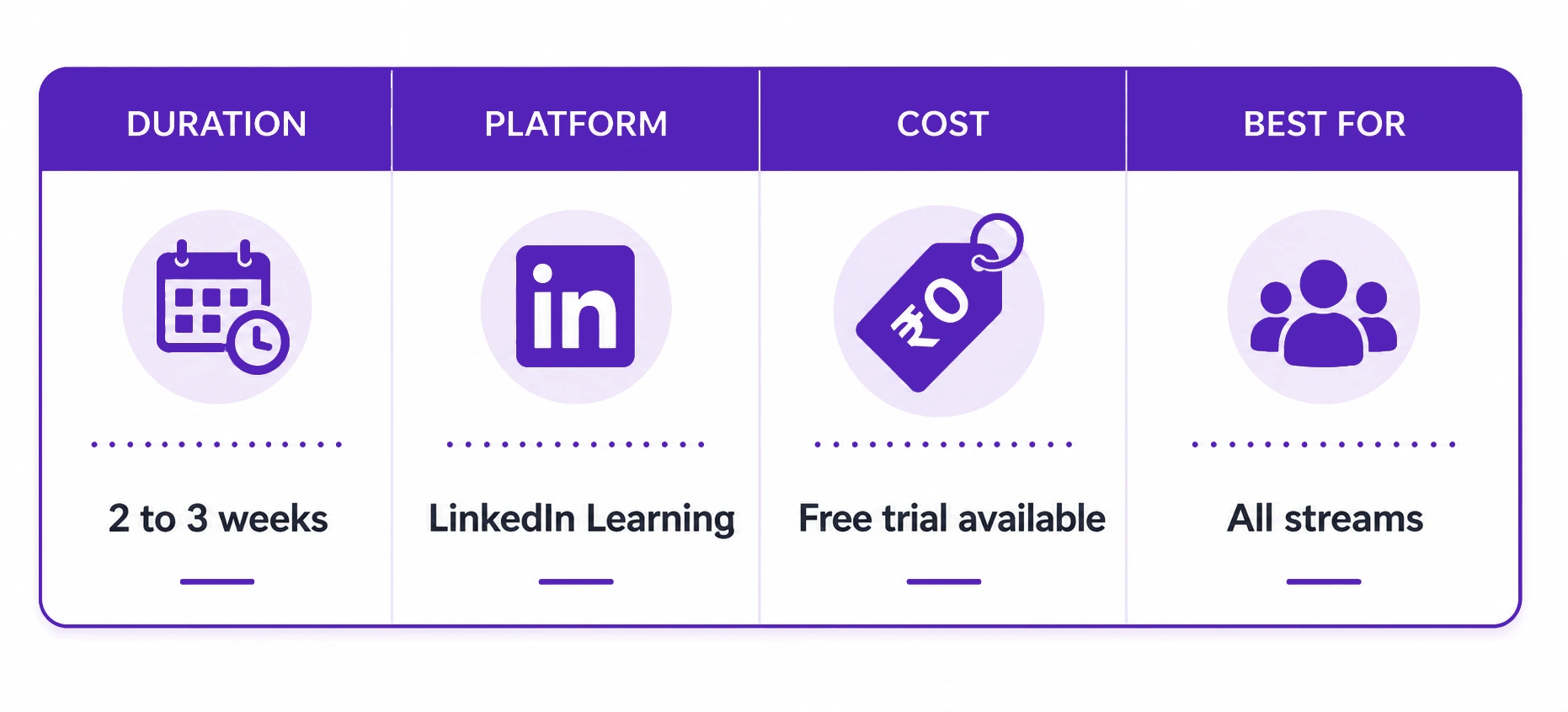
4. Communication & Personal Branding (LinkedIn Learning)
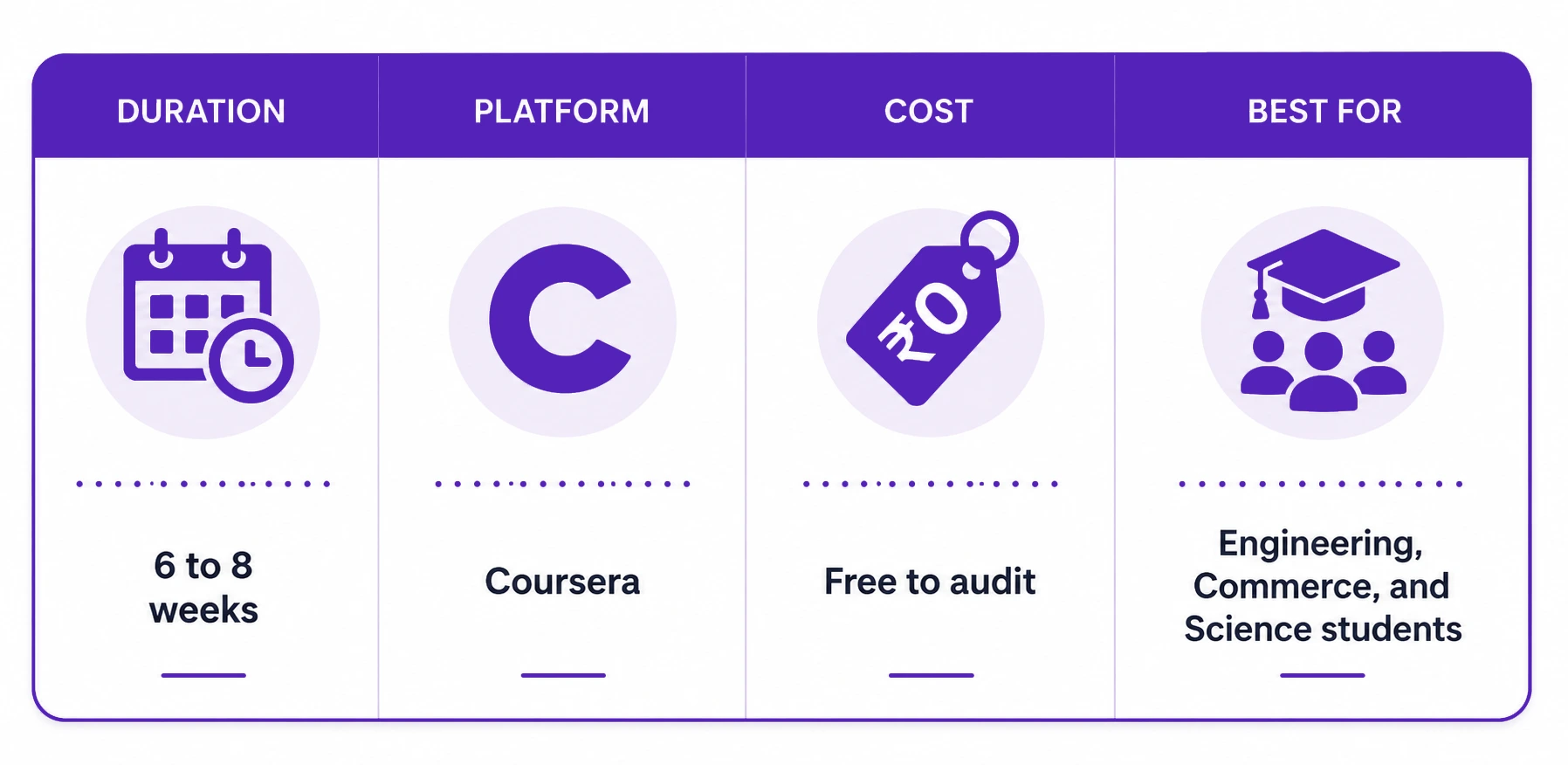
Technical skills only go so far. The ability to communicate clearly and present yourself with confidence plays a direct role in placements and job interviews. This is one of the more practical summer ideas for students, and it applies to every stream.
5. Cybersecurity Fundamentals (IBM via Coursera)
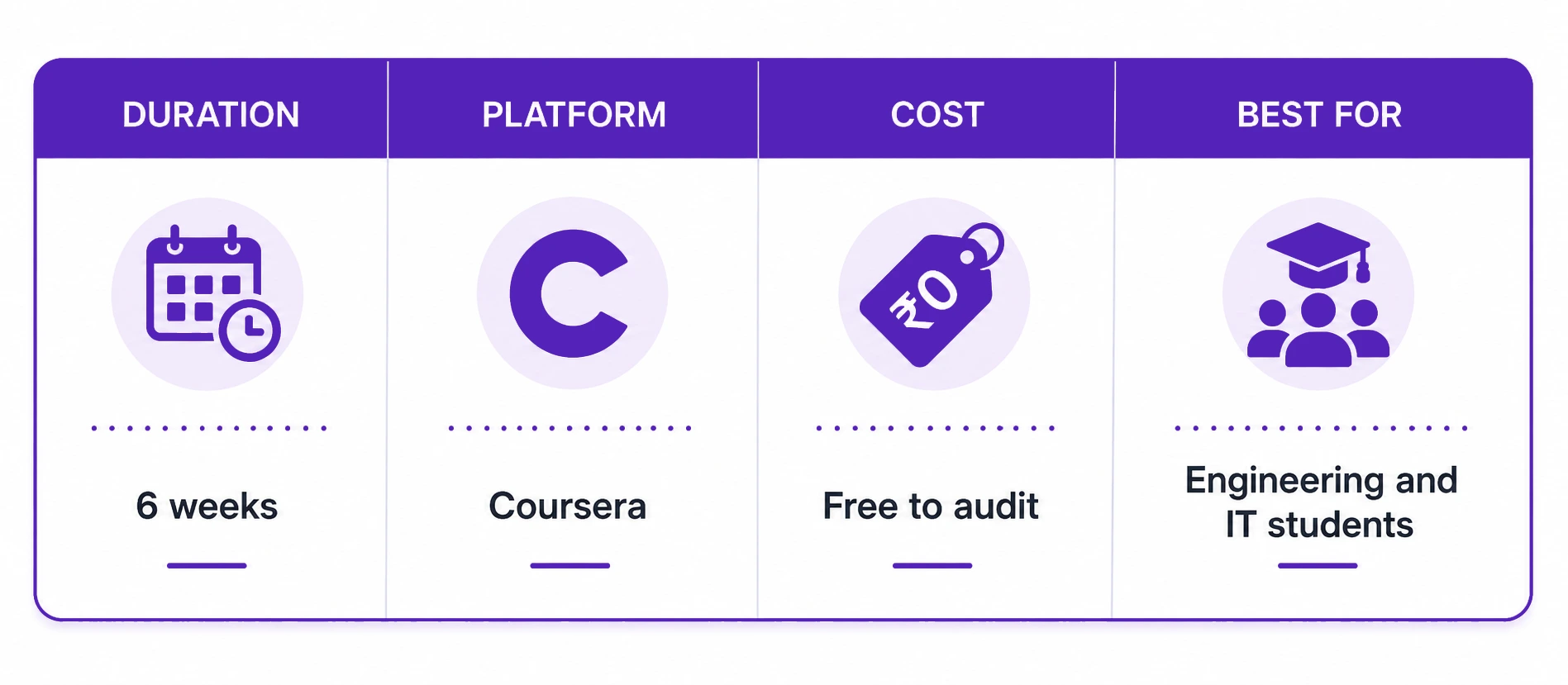
Cybersecurity Ventures projects 3.5 million unfilled cybersecurity roles globally by 2025. This course covers network security, data protection, and threat management. It is a good entry point for students who want to work in technology.
6. Financial Modelling & Valuation (Corporate Finance Institute)
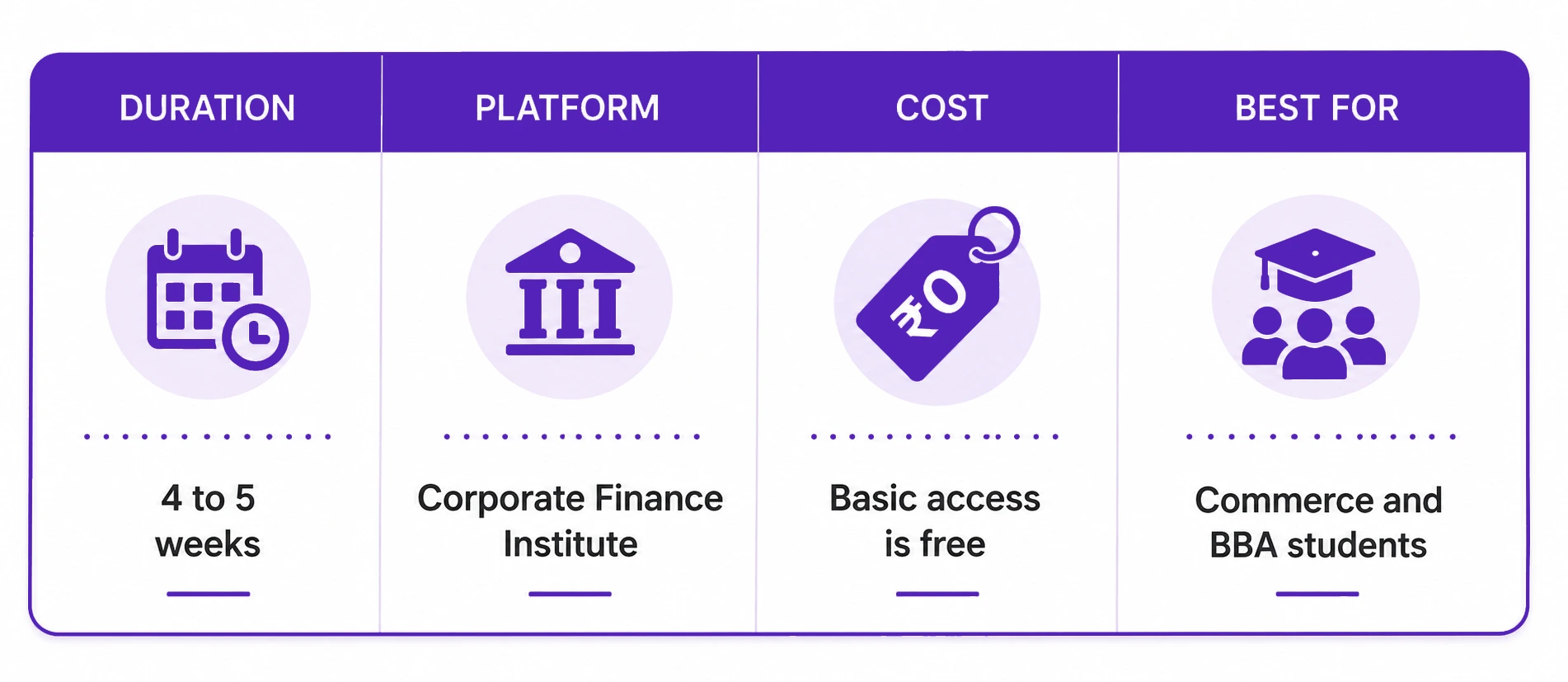
For students looking at finance, investment banking, or the CA pathway, financial modelling is one of the most useful skills to learn in summer vacation. The course covers Excel-based modelling, company valuation, and financial statement analysis.
7. Google UX Design Certificate
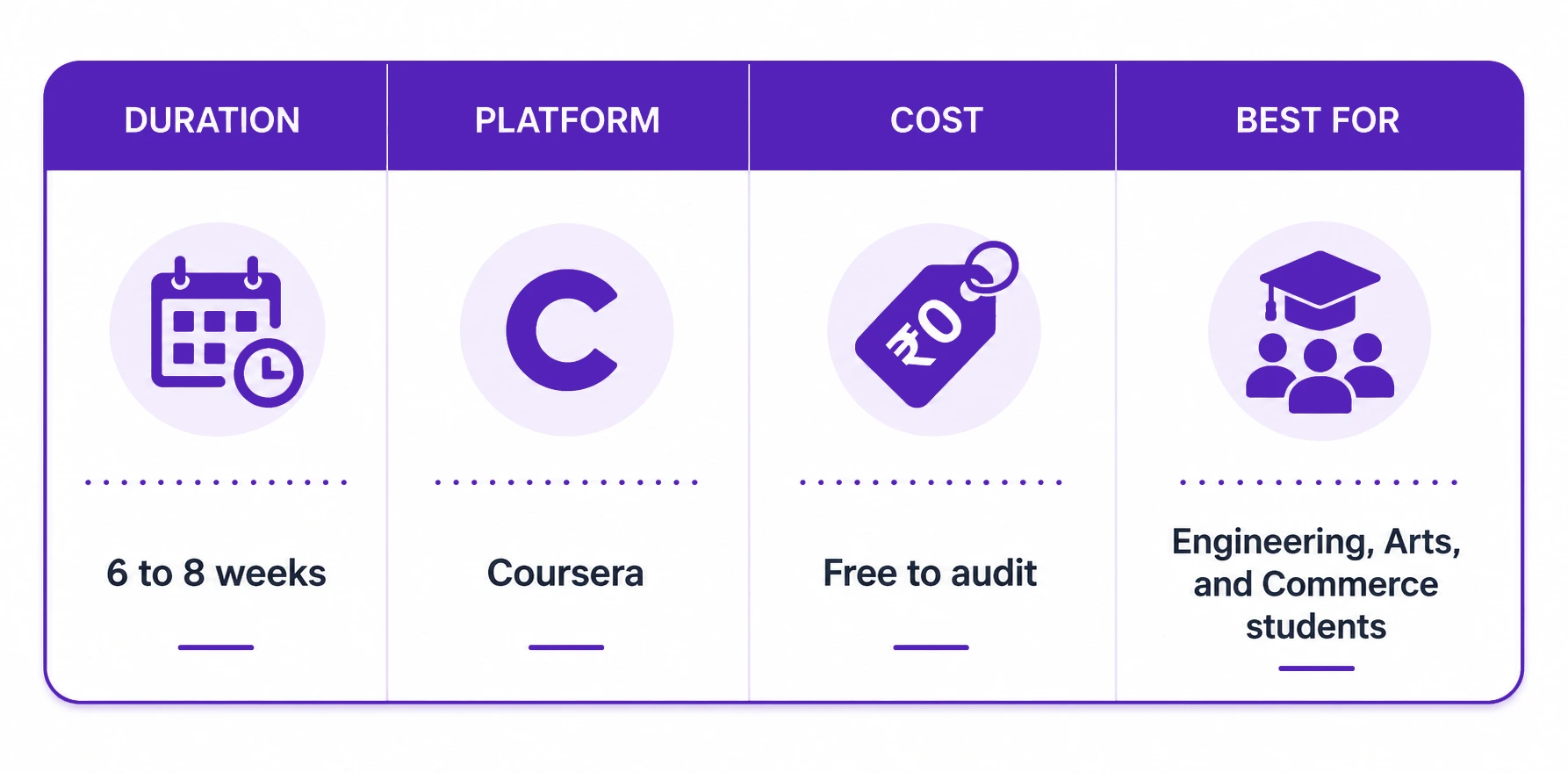
Most candidates applying for roles in product and tech companies have similar profiles: a degree, a few internships, and standard technical skills. A UX design certificate immediately sets a profile apart because very few students from non-design backgrounds think to pursue it.
This course teaches user research, wireframing, prototyping, and usability testing using industry tools like Figma. No design background is required. It is one of the more unusual courses Indian students are beginning to explore, and it opens doors across product companies, startups, digital agencies, and even marketing teams that need someone who understands how users think.
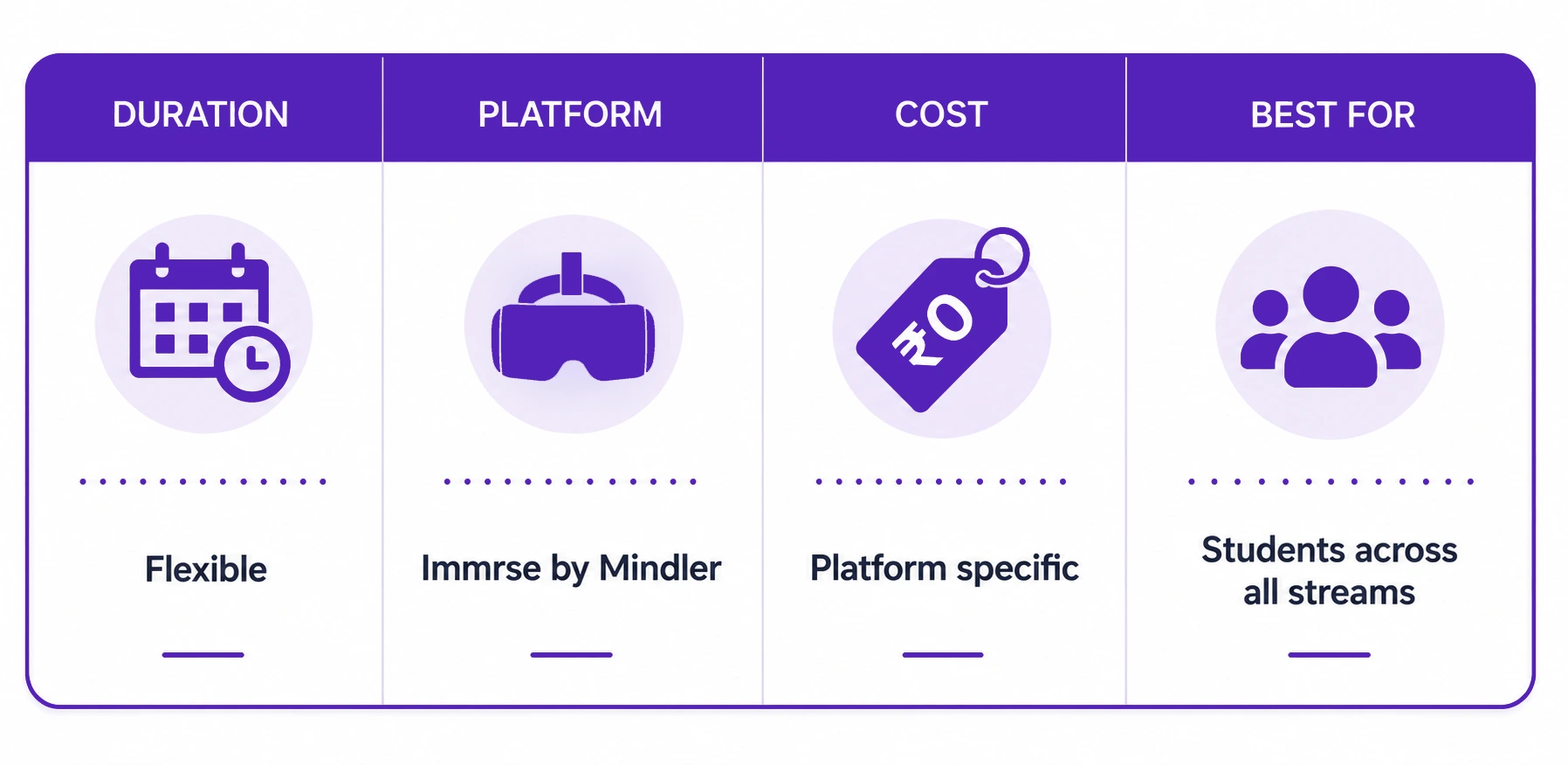
8. Virtual Career Internship (Immrse by Mindler)
For students who want more than a certificate, a virtual career internship gives structured exposure to professional work environments. Immrse by Mindler offers career track-based internship experiences that connect academic learning with what the workplace actually looks like, making it one of the most relevant options for summer training for students in 2026.
What Skills Should Students Focus on This Summer?
Here is an honest piece of advice: do not sign up for five courses in the first week of summer and abandon all of them by week three. It happens more than most students would like to admit.
The better approach is to pick one or two courses that genuinely connect to where you want to go, and see them through. There are more skills to learn in vacation for students than most people realise, but quantity is never the point. One completed course with a real output at the end carries far more weight on a CV than a list of half-finished certificates.
If you are still figuring out what skills you should learn during summer vacation, here is a simple way to think about it:
- Students heading into tech or engineering will get the most value from Python, data analytics, or cybersecurity. These are skills employers actively look for at the entry level.
- Commerce students or those planning an MBA should lean toward financial modelling or digital marketing. Both are immediately applicable and interview-friendly.
- Students who have not settled on a direction yet will get far more out of a virtual internship than any course. Exposure to a real work environment answers questions that no syllabus can.
- Students who want something short, universally useful, and quick to apply should start with communication and personal branding. It takes under three weeks and helps in every stream.
All courses on this list are self-paced, which means they work around your schedule, not the other way around. The only thing left is to start.
Make This Summer Count
Summer break does not last long, but what a student builds during this time stays with them well into the next academic year and beyond.
Most of the courses on this list are free to audit, which means there is no financial barrier to getting started. Google, IBM, and Coursera certifications can be completed at zero cost, and the certificates carry real weight with recruiters. For students who want structured, career-track exposure beyond a course, Immrse by Mindler is a paid option worth considering. It goes beyond skill-building and gives students a genuine look at what professional environments feel like before placements begin.
A simple way to think about it: if you are just starting out and exploring, go free. If you have a clearer career direction and want real-world exposure, a structured paid programme like Immrse gives you something no certificate alone can.
One course or experience, done properly, carries more weight than five that were never finished. That is a habit worth building early.
FAQs
- Are online certifications recognised by employers in India?
Yes, particularly those from platforms like Google, IBM, and Coursera. Recruiters treat these as a sign that the candidate has gone beyond the classroom and built skills on their own.
- How many courses can a student complete in one summer?
One to two is a practical target. When a person tries to do too many things at once, the probability that nothing will be completed is high. One should finish one program well rather than start several.
- Which is the best free certification course for Indians in 2026?
The Google Digital Marketing & E-Commerce Professional Certificate as well as Google Data Analytics Professional Certificate both are absolutely free and recognized within many industries.
- Is a virtual internship better than an online course?
They serve different purposes. A course builds a specific skill. An internship gives exposure to how a professional environment works and helps students figure out what kind of work suits them. Both are worth doing if time allows.