There is a moment in the Great Hall at Hogwarts that every career coach might have quietly envied. Not the verdict itself – Gryffindor, Slytherin – but what comes just before it. The pause. The instant in which a battered old hat peers inside a student’s mind and sees them: the temperament they haven’t yet named, the courage they don’t yet trust, the ambition they are still learning to admit to.
The Hat, of course, never told anyone what to become. It never whispered Auror or Healer or Minister of Magic. It simply saw who a student was – clearly, wholly, without the noise of expectation or peer pressure – and offered a starting point from which everything else could unfold.
That first act of seeing is what every career coach aspires to. And for the first time, artificial intelligence offers something that genuinely approaches it – the capacity to look across dimensions of a student’s personality, aptitude, and temperament that no single conversation can surface, and to do so for every student you serve, not merely the handful you have time to know deeply.
The question is not whether you should use AI in your coaching practice. You almost certainly already do. The question is whether the AI you are using was ever designed for that act of seeing.
The Tools You Already Have And What They’re Good For
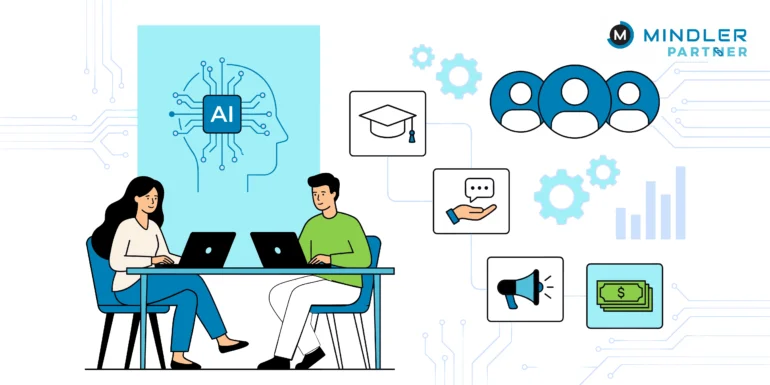
If you’ve drafted a workshop outline in ChatGPT, researched a career path through Claude, or used Gemini to prepare talking points before a parent meeting – you’re already part of a quiet revolution. Practising career coaches usually employ general AI tools across five distinct workflows: drafting content, building networking strategies, preparing for sessions, researching unfamiliar career domains, and creating marketing material for their own practices.
This is genuinely valuable work, and these tools do it well. They write clean drafts. They synthesise information quickly. Many of them are free, or nearly so. They are, in the truest sense, excellent assistants – tireless, uncomplaining, available at three in the morning when you’re preparing for tomorrow’s school workshop.
But an assistant, however brilliant, is not a specialist. And herein lies the distinction that matters.
Where General AI Meets Its Limits
Ask ChatGPT what a Class 10 student interested in biology should consider, and you will receive a perfectly articulate, thoroughly reasonable, and almost entirely generic answer. It will mention medicine, biotechnology, perhaps environmental science. It will sound authoritative. And it will be the same answer it gives every student who asks, because it knows nothing of this particular student – their spatial reasoning, their personality under pressure, their emotional intelligence, the specific texture of their curiosity.
General AI cannot do what dedicated career assessment tools for counselors are built to do. It cannot administer a validated psychometric assessment, measure aptitude across multiple dimensions, map personality traits against career archetypes, or produce a structured report grounded in the kind of psychometric rigour that makes your recommendation defensible when a sceptical parent asks why their child shouldn’t simply become an engineer. It can talk about these things with impressive fluency. It cannot do them.
This is not a criticism. These tools were never designed for this. You would not fault a Swiss Army knife for being a poor scalpel.
Purpose-Built AI – The Tools That Were Designed for This
What an aspiring career coach actually needs from AI is something closer to the Sorting Hat’s real gift: not omniscience, but the ability to look at a specific student and offer guidance shaped by who they actually are.
This is what purpose-built career counseling software does – and what separates a genuine online career coaching platform from a general-purpose chatbot.
Mindler Nexus, for instance, is a Career Pathway Designer that takes a student’s validated psychometric assessment results and builds an entire personalised career architecture around them. The student selects up to three career domains from the five their assessment recommends and Nexus generates not merely a list of matching careers, but a complete developmental roadmap: specific profile-building activities such as internships, research projects, and certifications; interdisciplinary career paths that combine their strongest domains in ways they might never have imagined (a student drawn to both Economics and Social Sciences might discover Behavioral Economics or Humanitarian Logistics); the soft skills their chosen paths will demand; role models – Indian and international – who have walked those roads before them; and virtual career simulations that let them experience a day in the life before committing to a direction. This is student career planning software in the truest sense, every output anchored to who that student actually is, not who a generic prompt assumes they might be.
And then there is the coach’s own need for support. When you are interpreting assessment reports across dozens of students, fielding career queries that span domains you may not have encountered before, or simply needing a knowledgeable second opinion at speed – Orion, Mindler’s AI assistant, is built precisely for that moment. It handles assessment interpretation, answers career queries with domain-specific depth, and offers voice support, functioning as an intelligent, always-available colleague that ensures your expertise is never limited by what you happen to remember at nine o’clock on a Tuesday evening.
One AI serves the student. The other supports the coach. Together, they represent what cloud-based career counseling tools were always meant to become – not generic assistants repurposed for guidance, but AI career coach technology built from the ground up for the work that actually matters.
The Wisest Approach
The career coaches who will thrive in the coming years will not be those who resist AI, nor those who surrender their judgment to it. They will be the ones who build a layered practice: general AI for the drafting, the research, the content – purpose-built AI for the student pathways that carry real consequence and the expert support that keeps the coach sharp.
The Sorting Hat, it is worth remembering, never claimed to know a student’s future. It simply saw them more clearly than they could yet see themselves – and trusted that the right beginning would lead to the right becoming.
That is, in the end, what a great career coach does. And AI, the right kind, built for this purpose – simply ensures you can do it for every student who needs you, not merely the ones you have time for.
Explore purpose-built AI for your career coaching practice – start a 7-day free trial at Mindler Partner.