You have just finished school or are planning to upskill, but you are stuck with one big question that if you should choose online courses or go for a traditional college experience? With so many options available today, this decision can feel overwhelming. For many students and working professionals, the dilemma is not just about convenience; it’s about career outcomes, skill development, and long-term value.
Education has changed dramatically in the last decade. Today, students have an option of taking courses online, the traditional courses offered at the campus, or the more innovative courses like hybrid courses that integrate online and classroom-based courses. With the rise of online education programs, most learners are increasingly asking which is more beneficial for creating an effective career, online courses vs offline courses.
It is not only about convenience when it comes to the question of online courses versus offline courses. It concerns variations in the teaching style, flexibility in learning, networking prospects, and career development. Online education is more convenient and available to some students, whereas others prefer offline courses due to the interaction with the classroom. This guide distinguishes between online study or offline study, contrasts the online mode of teaching with classroom learning, and examines the career prospects of both learning approaches to help learners make informed choices.
Understanding Different Modes of Learning
Before drawing a comparison between online courses vs offline courses, it is advantageous to have knowledge of the great categories of learning models that are in use today.
1. Online Courses
Online courses refer to courses that are offered via digital media. Students will go to lectures, hand in assignments, and even discuss them on the internet. Online courses and career qualifications in data science, marketing, design, and software development are now available in most universities and educational systems.
This form of learning is a modern and revamped version of online distance learning, where students are able to study anywhere without the need to be on a physical campus. It is nowadays very popular due to its accessibility and versatility.
2. Offline Courses
Offline courses entail the use of conventional classroom-based teaching where learners participate in lectures in physical classes. This format has been in use in colleges and universities for decades, as it provides the students with the opportunity to engage directly with the faculty and other students. Offline education continues to be majorly preferred in degree courses like engineering, medicine, law, and architecture, since in most of these courses, practical education and laboratory work are needed.
3. Hybrid Courses
A hybrid course combines elements of both online and offline learning. In hybrid mode teaching, students may attend some classes on campus while completing other components online. The hybrid models of education are becoming more popular due to the fact that they are flexible and contain the element of face-to-face interaction. For example, a mode of learning example could include online lectures during the week and physical workshops or labs on weekends.
Difference Between Distance Education and Online Education
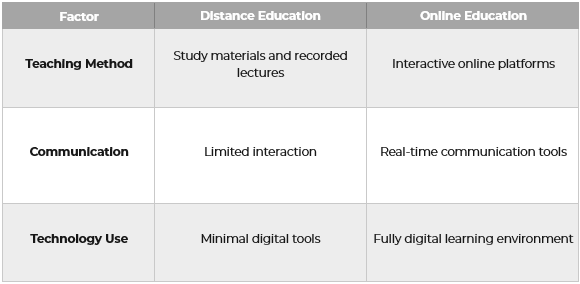
Many students confuse online distance learning with traditional distance education. The difference between distance education and online education lies mainly in interactivity. Online programs typically provide live classes, discussion forums, and collaborative tools, while older distance learning models relied heavily on self-study materials.
What Is the Difference Between Online and Offline Classes?
The question that students pose the most is usually what is the difference between online and offline classes. Although the goal is the same, offering an educational experience, there may be a significant difference in the way the learning will take place. Instead of viewing this only as a surface-level comparison, it is also important to understand how online education, compared to traditional learning, impacts skills, discipline, and career readiness.
Difference Between Online and Offline Courses
This difference between online and offline courses affects how students learn, collaborate, and gain practical experience.
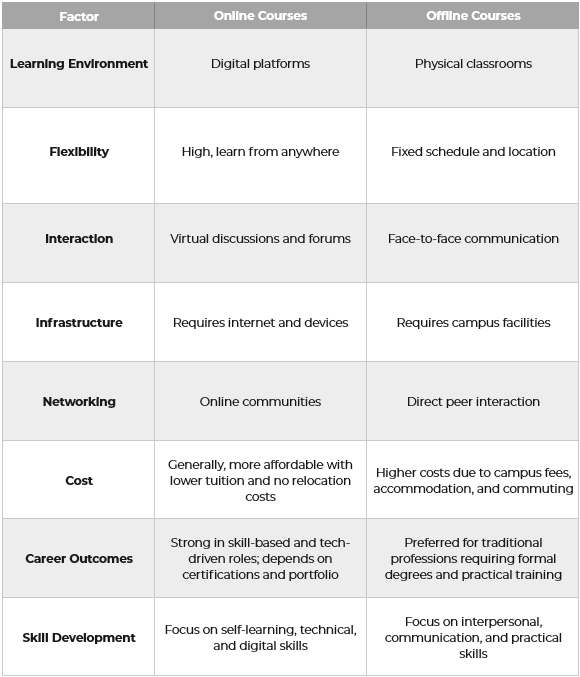
In essence, the difference between traditional learning and e-learning comes down to structure versus flexibility. While offline courses provide a disciplined and guided environment, online courses offer flexibility and convenience, making them ideal for working professionals and self-driven learners.
Benefits of Online Learning
Online education programs are also very popular among numerous students due to the flexibility offered by the programs. The rapid expansion of digital platforms has also improved the quality of online education courses across many disciplines. According to recent market research, the global e-learning platform is projected to grow from around $299 billion in 2024 to over $842 billion by 2030, reflecting the rapid adoption of online learning worldwide. Students exploring digital learning pathways can see how short courses and workshops can help build career skills. Some of the advantages of online learning are as follows:
- Flexible Scheduling: Students can access lectures anytime, making it easier to balance education with internships, jobs, or other commitments.
- Global Access to Education: With the online platform, students are able to study in foreign universities and with teachers without necessarily moving to those institutions.
- Less expensive: Online courses are cheaper compared to full-time courses taken at the campus of the respective university or college because they do not require any physical buildings.
- Skill-Based Learning: Online education programs tend to be focused on the practical, industry-specific proficiencies such as coding, digital marketing, and data analytics.
Benefits of Offline Courses
Online education has gained popularity, but there are still many more advantages of classroom education. Some of the reasons why offline courses are still relevant include the following:
- Face-to-Face Interaction: The students in the offline courses can get a personal contact with the professors and their fellow learners, which will help them to learn how to communicate as well as how to work in a team.
- Disciplined Learning Environment: Campus education offers a structured schedule and a disciplined learning environment, an aspect that is advantageous to students who prefer structured learning.
- Access to Campus Resources: Libraries, lab facilities, research centers, and student organisations are some of the main characteristics of traditional education.
- Good Networking Potential: Students have an opportunity to network with professors, alumni, and industry professionals when they do internships, seminars, and campus events.
Career Scope of Online and Offline Learning
Both online and offline courses can lead to successful careers if students choose the appropriate programs and build relevant skills. Due to the changing nature of the education environment, most institutions are currently adopting the hybrid mode of teaching, which enables students to acquire both theoretical and practical digital skills. The growing debate around whether online degrees hold the same value as traditional ones helps you examine how online education is shaping the future.
For example:
- Technology professionals often supplement their degrees with online courses in coding or data science.
- Creative professionals may combine university education with digital learning platforms to develop industry-ready portfolios.
How to Choose the Right Mode of Learning
Students who want to experiment with digital learning before committing to a program can also try different free online courses to get an overview of the various universities that provide online learning opportunities. However, following online and offline study is also determined by a number of personal and professional factors, including:
- Learning Style: There are those who learn in the classroom due to discussion, and other enjoys learning at their own pace in the digital world.
- Career Objectives: Medicine, engineering, and architecture are some of the fields that normally demand a physical training environment.
- Budget and Accessibility: The online education will be able to save money and will remove any relocation costs.
- Time Flexibility: Online and hybrid programs are favoured by working professionals as they offer them flexibility to work as well as learn.
Conclusion
The debate surrounding the issue of online study or offline study indicates the changing aspect of education. Even though online education is flexible, cheaper, and has access to global learning materials, the offline courses are structured, expose learners to practical exposure, and offer high levels of networking. The combination of the merits of both systems is being embraced today, with many institutions introducing hybrid courses and hybrid mode teaching.
Finally, the optimal learning experience will be based on personal objectives, learning style of choice, and career objectives. Students who want clarity about which educational pathway aligns with their interests and long-term career plans can benefit from structured guidance through Mindler’s career counselling platform. The decision of the mode of learning is not only a matter of convenience but also the search for the environment that helps you develop, acquire skills, and pursue a career of your dream.
FAQs
1. What is better online classes or offline classes?
This is determined by the answer to learning preferences. Online classes are flexible and accessible, whereas offline courses are structured and provide face-to-face interaction.
2. What is the difference between online and offline classes?
The main difference between online and offline classes lies in the delivery method. Online classes are conducted through digital platforms, whereas offline classes take place in physical classrooms.
3. Do employers recognise online education programs?
Indeed, most online learning programs are accepted by employers, particularly when provided by credible institutions of higher learning or reputable learning systems.
4. What are hybrid courses?
A hybrid course combines digital learning with in-person classes, allowing students to experience both online and offline education.
5. Is online distance learning the same as distance education?
No. The distinction between distance and online education is in regard to the use and interaction of technologies. Online education typically considers live sessions and interactive applications, whereas traditional distance learning is based more on self-study material.