Generative AI has become one of the major technology fields with the fastest growth today and is expected to provide very new and promising career opportunities. If you are still asking yourself how to become a gen AI engineer, this route map is a guide which will take you through the necessary gen AI engineer skills, suggested generative AI courses, important certifications like the IBM AI engineering professional certificate, and also the availability of generative AI courses with a free certificate.
Following this roadmap, you will not only acquire the necessary knowledge and practical experience but also earn the credentials to become an AI engineer and thrive in 2026 and after. In order to grasp the wider effect of AI on the sector, you can explore the ways that artificial intelligence is influencing the future of the IT industry.
What Does a Gen AI Engineer Do?
A Generative AI Engineer works with the whole process of AI models that are capable of generating original content in forms of text, image, code, audio, and others. The position, more often than not, is similar to that of an AI ML engineer, research engineer, AI product developer, and model optimisation expert.
Typical responsibilities include:
- Designing and training Large Language Models (LLMs)
- Using machine learning frameworks (TensorFlow, PyTorch)
- Building pipelines for data collection, cleaning, and prompt engineering
- Evaluating model performance and responsible AI practices
- Working on AI-driven applications and automation tools
Demand for AI engineers is predicted to grow exponentially through 2030, making it one of the most secure and future-proof career options for students.
How to Become a Gen AI Engineer (2026 Roadmap)
This detailed roadmap defines step by step the way how to become a Gen AI engineer without prior knowledge of programming.
1. Build Strong Fundamentals (Class 11–Undergraduate Level)
Before being enrolled in a generative AI course, students should cultivate basic competencies in:
- Mathematics (algebra, probability, statistics)
- Python programming
- Logical reasoning
- Basic principles of neural networks
- Data structures and algorithms
If you want to find out related positions first, then refer to the machine learning career options guide.
2. Choose the Right Academic Path
A special degree is not required, yet the majority of Gen AI developers have backgrounds in:
- B.Tech in artificial intelligence and machine learning engineering
- Computer Science
- Electronic Engineering
- Software Engineering
- Statistics or Data Science
Nonetheless, anyone from any field of study can become an AI engineer if they take the structured courses and practical training seriously.
3. Take the Best Generative AI Courses (Beginner to Advanced)
One of the most common questions students ask is: which course is best for generative AI?
Here are the most recommended learning pathways for 2026:
A. Industry-Recognised Foundation Courses
These courses help you understand AI, ML, and model-building basics.
- Best Gen AI course recommendations include:
- Google AI Essentials
- Meta AI Fundamentals
- Coursera’s Andrew Ng Machine Learning Specialisation
- Stanford CS221 (AI principles)
These courses introduce essential tools for AI engineering.
B. Professional Certification Courses (Most Valuable for 2026)
In case you are looking for credentials that are accepted worldwide, then these are the best choices:
- IBM AI engineering professional certificate: A very reputable course that concentrates on ML, deep learning, and deployment.
- IBM Generative AI Engineering professional certificate: Specifically developed for Large Language Models (LLMs), transformers, prompt engineering, and Generative AI applications.
- Microsoft Certified: AI Engineer Associate
- AWS Machine Learning Speciality Certification
- NVIDIA Deep Learning Institute Certifications
Passing a generative AI engineering course gives one a huge advantage in the job market and also equips the student with skills for dealing with real-world challenges.
C. Free Generative AI Courses (With Certificates)
Students on a budget can still access excellent resources. Top generative AI course free with certificate options include:
- Google Learn AI for Free
- IBM SkillsBuild Generative AI Courses
- NVIDIA Intro to AI and Deep Learning
- LinkedIn Learning Free AI Courses (limited period)
These are ideal for beginners exploring the field before committing to advanced programmes.
4. Gain Practical Experience (Core Requirement for 2026 Jobs)
Regardless of which generative AI courses you take, employers prefer candidates who can:
- Build simple LLM models
- Train models using public datasets
- Create ChatGPT-like applications
- Develop AI-driven apps or automation scripts
- Integrate APIs such as OpenAI, Gemini, and Claude
- Perform model evaluation and optimisation
Tools you will frequently use include:
- Python
- PyTorch
- TensorFlow
- Hugging Face Transformers
- LangChain
- GitHub
- Docker
- Jupyter Notebooks
Practical experience is what separates strong candidates from average applicants.
5. Build a Strong AI Portfolio
To become an AI engineer, you must demonstrate your expertise through tangible work. A strong portfolio includes:
- AI chatbots
- Text-to-image tools
- Summarisation models
- Audio transcription tools
- Data-driven classification models
- Model fine-tuning projects
Platforms to showcase your projects:
- GitHub
- Kaggle
- Personal website
- LinkedIn and online student portfolios
A powerful portfolio increases your chances of landing internships or early job opportunities.
6. Master the Essential Gen AI Engineer Skills
The companies that will be hiring in 2026 will look for very specific Gen AI engineer skills, including:
Technical Skills:
- Deep learning
- Prompt engineering
- Natural language processing (NLP)
- Transformer architectures
- Model fine-tuning
- Cloud computing (AWS, Azure, GCP)
Soft Skills:
- Problem-solving
- Analytical thinking
- Collaboration
- Ethical decision-making
- Communication
The sum of the two is what makes you an all-around AI professional.
7. Apply for Internships and Real-World Projects
Internships allow you to apply classroom knowledge to real applications. You can work as:
- AI Research Intern
- ML Model Testing Intern
- NLP Developer Intern
- Data Science Intern
- Software Engineering Intern (AI-focused)
8. Get Career Coaching Support (Highly Recommended)
Becoming an AI engineer requires clarity on skills, pathways, and certifications. Students who work with career coaches, attend psychometric assessments, or use structured career-planning tools often progress faster and make better decisions.
You can explore personalised guidance through Mindler’s AI-focused career programmes, AI & Machine Learning.
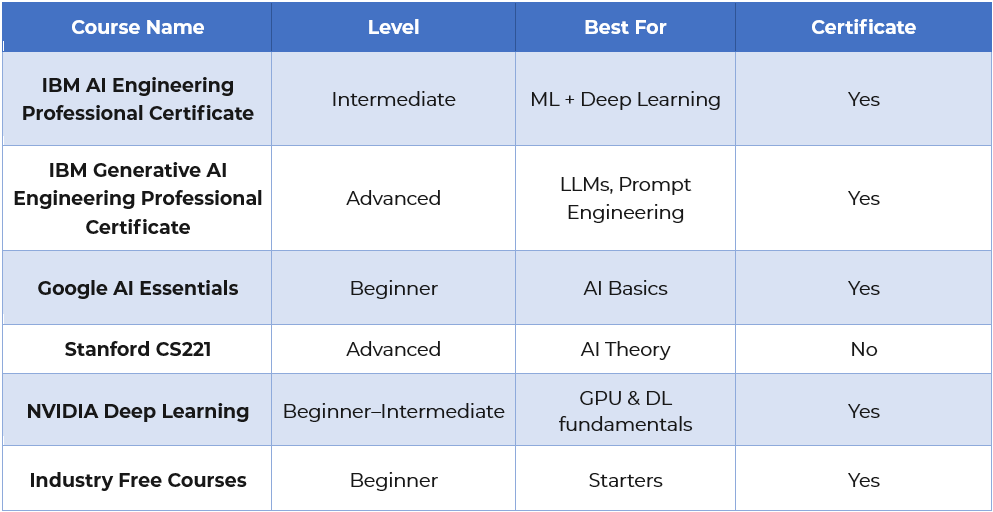
Best Courses to Become a Gen AI Engineer
Here are some of the best industry-recognised courses to help you build strong foundations, develop hands-on skills, and progress confidently towards a career as a Gen AI engineer.
Key Takeaway
Generative AI is one of the most rewarding and future-oriented career paths for students entering the workforce in 2026. If you choose the right subjects, create a strong technical basis, get qualified as a certified artificial intelligence engineer, and gather practical experience, then you can safely follow an AI engineering career path. If you are ready to move forward, explore AI career guidance and structured learning paths through Mindler.
Start your AI career journey today with Mindler’s AI career guidance programmes.
FAQs
1. Is AI engineering a good career in 2026?
Yes. AI positions are ranked among the most rapidly growing ones worldwide, and they provide good compensation along with a high level of security across various industries such as healthcare, finance, IT, retail, and education.
2. Do I need coding to become a Gen AI Engineer?
Fundamental Python is a must. There are beginner-friendly courses that you can take and eventually end up learning deep learning and transformer-based architectures.
3. Which course is best for generative AI beginners?
Foundational courses from Google, IBM SkillsBuild, and Coursera are excellent starting points. Students can later progress to the best Gen AI course options listed above.
4. Can students from non-technical streams learn Generative AI?
Yes. Several students coming from the fields of commerce and humanities manage to change their path via a well-defined learning process, mentoring, and practical experience.
5. How long does it take to become a Gen AI Engineer?
The duration for a student to get ready for a job with the help of continuous learning, projects, and internships is 12–24 months.